HNA Magazine
Music
1 June 2026
Feature5 min read
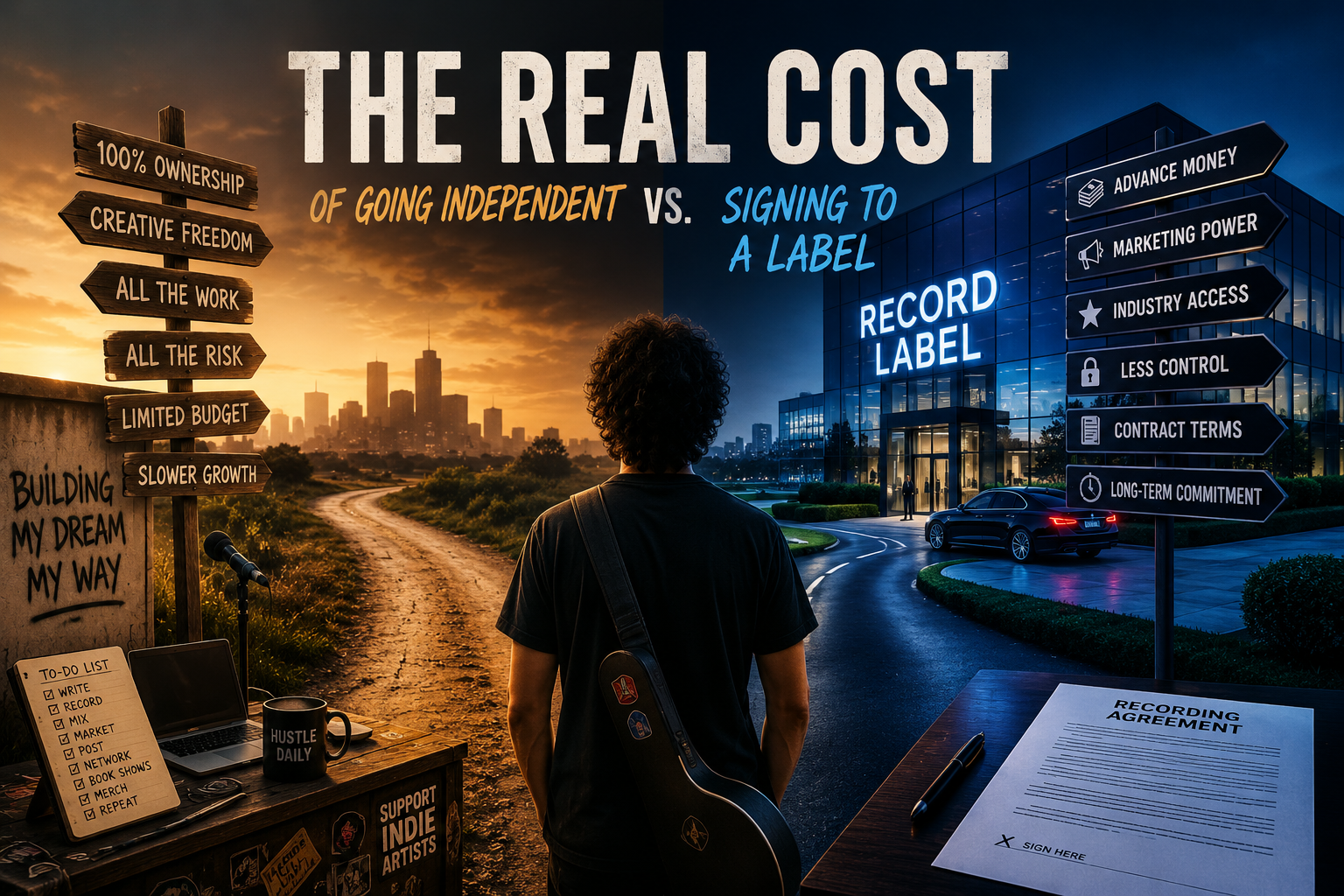
The High Stakes Gamble: The Real Cost of Going Independent vs. Signing a Major Label Deal
Exploring the financial and creative trade-offs between the DIY hustle and the major label machine in the modern Afro-fusion era.
The Great Divide: Ownership vs. Infrastructure
In the high-stakes ecosystem of modern Afrobeats and global RnB, the narrative of the 'independent underdog' has become the industry’s most romanticized trope. We see the viral TikTok hits, the sold-out DIY tours, and the artists shouting about owning their masters from the rooftops of Lagos and London. But behind the glossy aesthetic of creative freedom lies a brutal financial reality. On the flip side, the major label machine—once the gatekeeper of all things stardom—is increasingly viewed with skepticism by a generation of artists who value equity over an upfront check. However, the question remains: What is the actual price of admission for each path?
As the barrier to entry for music production collapses, the barrier to attention has never been higher. Deciding whether to stay independent or sign your life across the dotted line isn't just a creative choice; it is a complex venture capital decision that will dictate the next decade of an artist's life.
The Independent Hustle: The Cost of Total Control
Going independent in 2024 is effectively starting a small business where the product is your soul. While you retain 100% of your royalties and total control over your brand, you are also the CEO, the CFO, and the head of marketing. For an emerging artist in the Afro-fusion space, the overhead is staggering. We aren't just talking about studio time; we are talking about the machinery required to compete with global superstars.
The Hidden Ledger of the DIY Artist
To move the needle today, an independent artist needs more than just a 'good' song. They need visibility. Let’s break down the quarterly burn rate for a serious independent contender:
- Marketing & PR: A world-class PR campaign to land on editorial playlists and major publications can cost anywhere from $3,000 to $10,000 per single.
- Visual Content: In the age of short-form video, an artist needs a constant stream of high-quality visuals. A competitive music video starts at $5,000, but the real cost is the daily content creation—hiring videographers for 'Behind the Scenes' and social media snippets.
- Distribution & Admin: While services like DistroKid are cheap, the administrative burden of clearing samples, managing publishing rights, and tracking global royalties requires either a paid manager or an immense amount of time.
"Being independent is 10% music and 90% logistics. You aren't just an artist; you're a logistics manager for your own dreams," says one Lagos-based rising star who recently turned down a mid-six-figure deal.
The Major Label Machine: The Luxury of a Loan
Signing to a major label—be it Sony, Universal, or Warner—is often misunderstood as 'making it.' In reality, it is more like taking out a massive, high-interest business loan where the collateral is your physical image and your intellectual property. The allure is the Advance: a lump sum of cash that can solve an artist's immediate problems. But that money isn't a gift. It is recoupable.
The Anatomy of the Advance
When a label signs an artist for $500,000, that artist is technically $500,000 in debt to the label. Until the label makes that money back through the artist’s share of royalties (which is usually only 15% to 20%), the artist sees zero dollars in streaming income. Furthermore, the label often takes a '360 deal,' meaning they get a cut of touring, merchandise, and brand endorsements.
However, what the label provides isn't just money; it's leverage. They have the power to call Spotify global heads, the budget to buy billboard space in Times Square, and the infrastructure to coordinate international press tours that an independent artist simply cannot facilitate. For many, the label is the engine that converts local buzz into global hegemony.
Comparative Economics: A Reality Check
1. The Royalty Split
On a streaming service like Spotify, an independent artist might earn around $4,000 per million streams. If they own their masters, they keep almost all of it. A signed artist might see as little as $600 to $800 of that same million streams after the label takes its cut and applies it against the unrecouped balance. To survive on royalties alone as a signed artist, you don't just need hits; you need juggernauts.
2. The Freedom Factor
Independent artists can pivot. If a sound is trending in Amapiano or Highlife, they can record and drop a track in 48 hours. A signed artist is often at the mercy of a 'release schedule.' If the label's priority for the quarter is a bigger superstar, your project might sit on a shelf for a year, losing its cultural relevance.
The Middle Ground: The Hybrid Model
Increasingly, we are seeing the rise of the 'partnership' or 'distribution-plus' deal. Artists like Burna Boy and Wizkid have mastered the art of leveraging their own brands (and their own labels like Spaceship or Starboy) to partner with majors. This allows them to maintain a degree of creative sovereignty while plugging into the global distribution power of a conglomerate.
This hybrid model is the future of the African music industry. It allows for local expertise to handle the cultural nuances while the major label handles the heavy lifting of the global Western markets.
Conclusion: Choosing Your Struggle
Ultimately, the choice between going independent and signing to a label isn't about which one is 'better.' It’s about which struggle you are equipped to handle. Are you ready to be the broke CEO of your own empire, or are you willing to be a high-earning employee in someone else’s corporation?
The real cost of independence is exhaustion and financial risk. The real cost of a label is autonomy and potential equity. In an era where the audience can smell authenticity from a mile away, the most valuable currency isn't the advance or the master recording—it's the connection. Whichever path brings you closer to your listeners with your sanity intact is the one that is truly worth the price.
Stay original. Stay informed. This is HNA.
Explore HNA